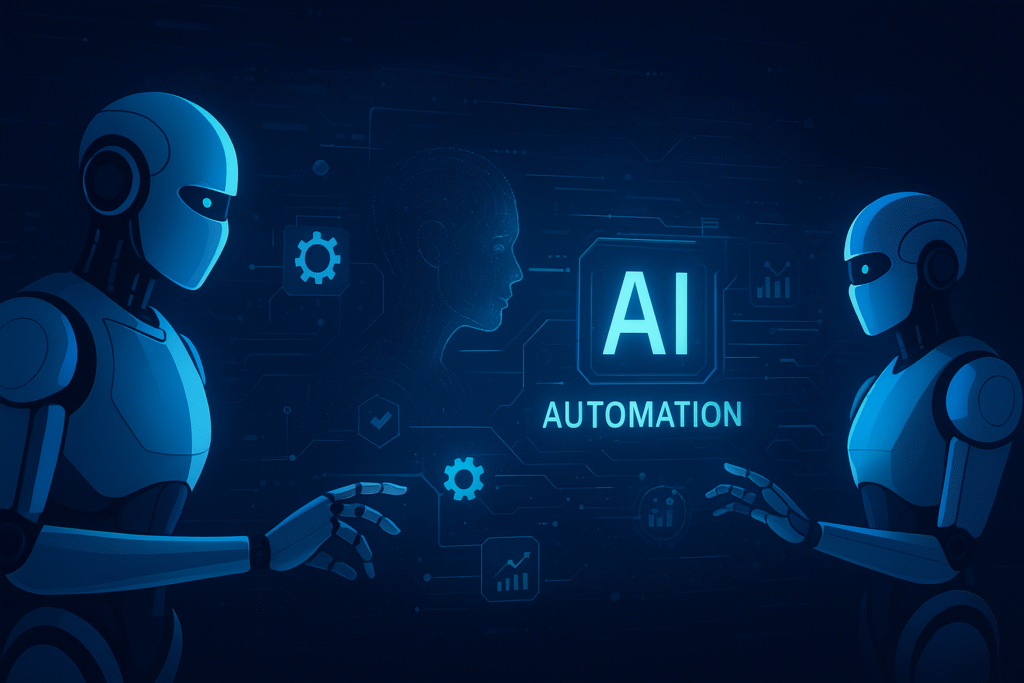
Discover how Agentic AI is revolutionizing automation in 2025 — from smart assistants to fully autonomous business workflows.
Introduction: The Rise of Agentic AI
Artificial Intelligence has evolved far beyond simple chatbots. In 2025, we are witnessing the rise of Agentic AI — intelligent systems that can think, decide, and act on their own. Unlike traditional AI that relies on user prompts, Agentic AI agents perform tasks autonomously, streamlining entire workflows. From managing marketing campaigns to writing and deploying code, these agents are reshaping how businesses and individuals operate in the digital era.
Recent breakthroughs from companies like OpenAI, Hugging Face, and startups such as Cognition Labs have accelerated this transformation, signaling the beginning of a new age of smart automation.
What Is Agentic AI?
Agentic AI refers to autonomous artificial intelligence systems capable of performing complex tasks independently once given a goal. Instead of waiting for continuous instructions, these agents can plan, execute, and adjust actions dynamically using contextual understanding and data feedback. Think of it as an AI that doesn’t just answer questions — it completes projects.
For example, imagine telling your AI assistant, “Organize a product launch campaign.” It will conduct market research, draft social media posts, schedule them, and even analyze engagement data — all autonomously.
How Agentic AI Works
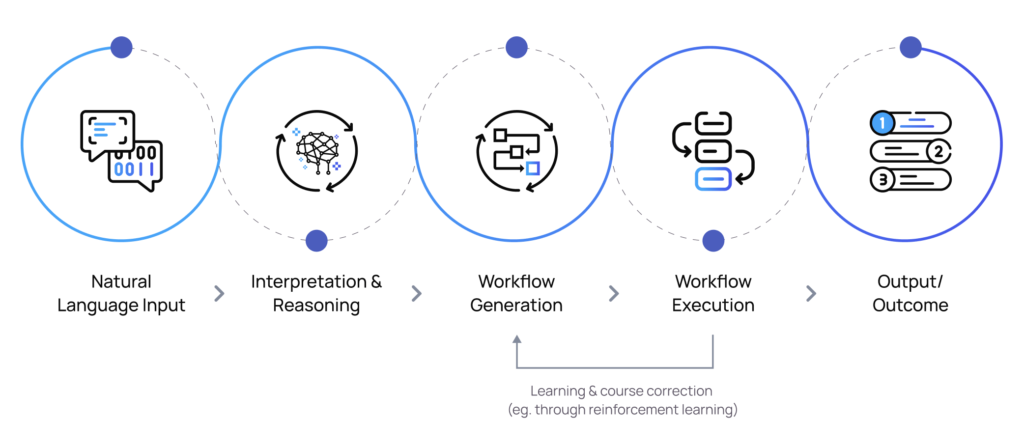
Agentic AI operates through three main components:
- Large Language Models (LLMs): The “brain” that processes natural language and reasons through tasks. Tools like GPT-4 and Claude 3 form the foundation of reasoning and communication.
- Tool and API Integrations: These give AI “hands” — the ability to perform real-world actions like sending emails, analyzing spreadsheets, or managing websites.
- Memory and Feedback Loops: Allow the AI to learn from past outcomes, improving accuracy and adaptability over time.
Real-World Applications in 2025
Agentic AI is no longer theoretical — it’s already reshaping industries:
- Customer Support: AI agents can autonomously resolve tickets, escalate issues, and learn from client feedback to enhance service quality.
- Marketing Automation: AI can plan, launch, and optimize ad campaigns on platforms like Google Ads and Meta without constant human oversight.
- Software Development: Autonomous coding agents like Devin by Cognition Labs can write, test, and deploy full software applications.
- Healthcare: Smart assistants help manage patient appointments, monitor health data, and suggest interventions in real time.
The Benefits of Agentic AI for Businesses
Agentic AI offers more than efficiency — it enables transformation. Businesses can offload repetitive and data-driven tasks to autonomous systems, freeing employees to focus on creativity, strategy, and innovation. This leads to faster decision-making, reduced operational costs, and around-the-clock productivity. By integrating AI agents into workflows, organizations gain a scalable workforce that never sleeps and continually improves.
Key Players and Tools to Watch
As Agentic AI evolves, several key players are leading the innovation:
- OpenAI GPTs: Customizable autonomous agents that perform specific workflows using GPT-4 Turbo.
- Anthropic Claude 3: Advanced reasoning capabilities designed for complex business logic and safe automation.
- Hugging Face Transformers Agents: Open-source agents that can integrate with Python tools and APIs.
- AutoGPT and BabyAGI: Open-source community projects that inspired the agentic revolution.
- Cognition Labs Devin: The world’s first AI software engineer capable of coding entire applications independently.
Ethical and Security Concerns
With great automation comes great responsibility. Agentic AI raises serious concerns about transparency, accountability, and job displacement. Since these agents make autonomous decisions, errors could occur without clear human oversight. For example, an AI agent managing finances could make risky investments or expose sensitive data.
Companies must prioritize ethical frameworks, data protection, and human-in-the-loop supervision to prevent misuse or unintended consequences.
8Preparing for the Future: How to Adapt
To stay competitive in an AI-driven world, individuals and organizations must adapt. Here’s how:
- Learn how to integrate AI tools into existing workflows using automation platforms like Zapier and LangChain.
- Experiment with agentic platforms like OpenAI GPTs and Hugging Face Agents to understand real use cases.
- Develop AI governance policies that define ethical boundaries and oversight responsibilities.
- Upskill employees in prompt engineering, AI literacy, and automation management.
Conclusion
Agentic AI represents a paradigm shift — the movement from responsive AI to proactive, autonomous intelligence. As we move further into 2025, these agents will play a vital role in redefining productivity and creativity across industries.
Businesses that embrace and responsibly integrate Agentic AI today will not only stay ahead of the curve but will lead the digital transformation of tomorrow.
In short: The future of automation isn’t about humans being replaced — it’s about humans being empowered by intelligent, goal-driven AI partners.